The 2017 quarter value is easier to read when the coins are split by type first. The year is not a key date. The regular Philadelphia and Denver coins are modern circulation quarters. The stronger premiums come from the San Francisco collector issues.
That is the main reason 2017 deserves a closer look. A free coin scanner app can help keep these formats apart inside one group, and quickly check all minting details like composition, parameters, and others, but the value difference comes from the issue type itself.
Why Type Matters More Than Date in 2017
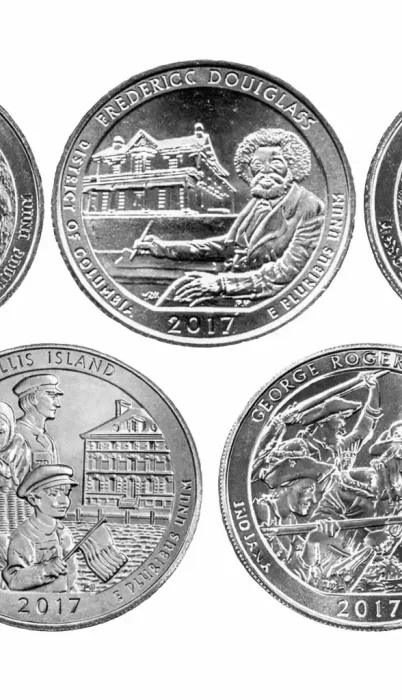
The year had five designs: Effigy Mounds, Frederick Douglass, Ozark Riverways, Ellis Island, and George Rogers Clark. But the market usually separates the coins by finish and mint format before it separates them by reverse design. That is the practical way to read 2017.
What changes the price most:
- Circulation strike or collector strike;
- Clad proof or silver proof;
- Regular S uncirculated or enhanced uncirculated;
- Ordinary grade or stronger Mint State.
That is why two 2017 quarters with the same design can sell in very different brackets. A normal 2017-P from circulation belongs to one market. A 2017-S silver proof belongs to another. A 2017-S enhanced uncirculated coin sits in another tier again.
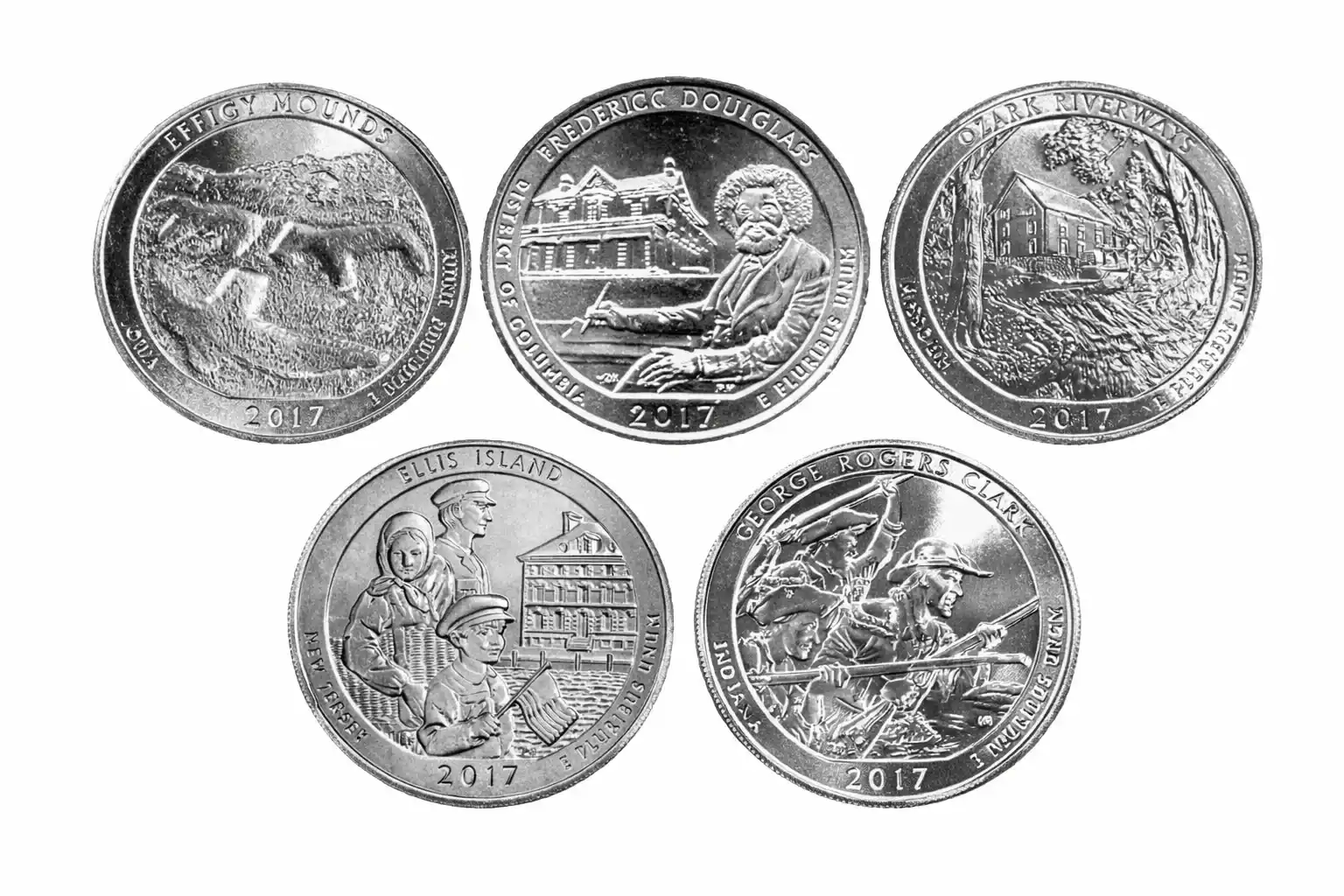
Main Types of 2017 Quarters
The useful split is simple: P and D business strikes, S clad proofs, S silver proofs, S uncirculated coins, and S enhanced uncirculated coins. The values below are practical collector ranges for common examples, not top-pop auction records.
| Type | Mintmark | Main Finish | Approximate Value Range |
| Business strike | P / D | Standard circulation finish | $0.25–$1.24 |
| Clad proof | S | Mirror-like proof finish | $5.63–$8 |
| Silver proof | S | 90% silver proof finish | $27–$28+ |
| Uncirculated collector strike | S | Mint set collector finish | $3.62–$6 |
| Enhanced uncirculated | S | Special enhanced finish | $4.96–$7 |
The table shows the real point of the year. P and D coins stay at the bottom. The S coins break into several collector groups. That split matters more than the date alone.
The Common Coins: 2017-P and 2017-D
Most 2017-P and 2017-D quarters are common. In circulated condition, representative 2017-P pieces sit around the low-cent range above face value. In typical uncirculated condition, many 2017-P and 2017-D quarters are around the low-dollar range. That is normal for a modern circulation issue with strong survival.
This is the part many collectors overestimate. The date is recent. The coins were saved early. Clean raw pieces are easy to find. That keeps the lower end of the market calm.
What keeps most P and D coins inexpensive:
- Large mintages;
- Easy availability;
- Strong survival;
- Weak premium below higher Mint State grades.
Where Business Strike Value Begins to Rise
Modern quarter premiums start late. A coin must be noticeably better than average before the market pays attention. APMEX’s published levels for the 2017-P and 2017-D Ellis Island quarters show that pattern clearly: around $1 at MS65, around $2 at MS66, and around $13 at MS67. The jump does not begin on the date. It begins at the grade.
A 2017 business strike starts to separate when it has:
- Fewer marks in the fields
- Brighter luster
- Stronger eye appeal
- A higher certified grade
Proof Issues
Clad Proofs
The 2017-S clad proofs belong to a collector tier. The Mint sold a separate 2017 America the Beautiful Quarters Proof Set, and these coins carry the standard proof look: mirrored fields and collector handling. According to the USA Coin Book, 2017-S clad proof quarters are in the mid-single-digit range. That is far above face value, but still a moderate proof market, not a rare-coin market.
This is the first place where the S mintmark begins to matter in a larger way. Not because S is rare by itself, but because the coin is a different product from the circulation strikes.
Silver Proofs
The 2017-S silver proof quarters sit above the clad proofs. The Mint’s silver proof set used 90% silver quarters, and 2017-S silver proofs are around the high-twenties. That gives them a clearer floor and a stronger collector profile than the clad proofs.
This is the cleanest collector split in the year:
- Clad proof = collector finish;
- Silver proof = collector finish plus silver content.
The Special S Coins: Uncirculated and Enhanced Uncirculated
The 2017-S story is not limited to proofs. There are also S uncirculated coins from the mint set, and S enhanced uncirculated coins from the 225th Anniversary Enhanced Uncirculated Coin Set. The Mint states that the enhanced coins use a combination of laser-frosted areas and unpolished fields, creating a look distinct from proofs. That gives 2017 a broader collector structure than many recent quarter years.
The S uncirculated coins usually sit below the clad proofs but above ordinary P and D business strikes. The enhanced uncirculated coins usually sit above the standard S uncirculated pieces because of the special finish and set identity. The difference is not extreme, but it is real.
| Type | Set Context | Approximate Value Range | Main Reason It Sells Higher |
| 2017-S Uncirculated | Mint set issue | $3.62–$6 | Collector-only S format |
| 2017-S Enhanced Uncirculated | 225th Anniversary set | $4.96–$7 | Special finish |
| 2017-S Clad Proof | Standard proof set | $5.63–$8 | Proof surfaces |
| 2017-S Silver Proof | Silver proof set | $27–$28+ | Silver content and proof format |
This table explains why 2017 should be sorted by type first. The S mintmark does not mean one thing. It means several different collector products.
Full Value Overview by Type
The best way to read the year is to line up the types in one market ladder. That keeps the common coins, the proofs, and the special S formats in their proper places. The table below shows practical collector ranges, not isolated record prices.
| Version / Level | Approximate Value Range | Market Reading |
| 2017-P / 2017-D circulated | $0.25–$0.40 | Common pocket-change level |
| 2017-P / 2017-D typical uncirculated | $0.61–$1.24 | Small premium only |
| 2017-P / 2017-D stronger Mint State | $2–$13+ | Better grades start to matter |
| 2017-S uncirculated | $3.62–$6 | Collector-only S format |
| 2017-S enhanced uncirculated | $4.96–$7 | Special finish premium |
| 2017-S clad proof | $5.63–$8 | Standard proof market |
| 2017-S silver proof | $27–$28+ | Strongest regular per-coin floor |
The pattern is direct. Most circulation pieces stay cheap. The S collector issues create the stronger premiums. The silver proof sits highest among the normal quarter formats because it combines proof status with silver value.
What Affects the 2017 Quarter Value Most
The price structure for 2017 is not driven by the year alone. It is driven by format, grade, and metal.
The main value drivers are:
- Issue type
- Grade
- Silver content
- Surface quality
- Proof or enhanced finish
- Collector demand for S formats
That is why a common P or D quarter can stay near face value while an S silver proof or an enhanced uncirculated piece sits in a different price bracket from the start.
Errors and Variations: What Really Matters
2017 is not mainly an error-driven quarter year. The stronger collector interest comes from the different S formats and from grades on the P and D coins. That matters more than random marks or minor modern anomalies.
What deserves attention:
- Correct issue type
- Proof vs silver proof separation
- Enhanced finish
- Stronger Mint State surfaces
What usually does not add much:
- Small circulation marks
- Minor machine-like doubling
- Random surface damage
- Ordinary post-mint problems
FAQs
Is the 2017 quarter a key date?
No. It is common as a date. The premiums come from type, grade, and silver content, not from key-date scarcity.
Are the 2017-P and 2017-D quarters usually valuable?
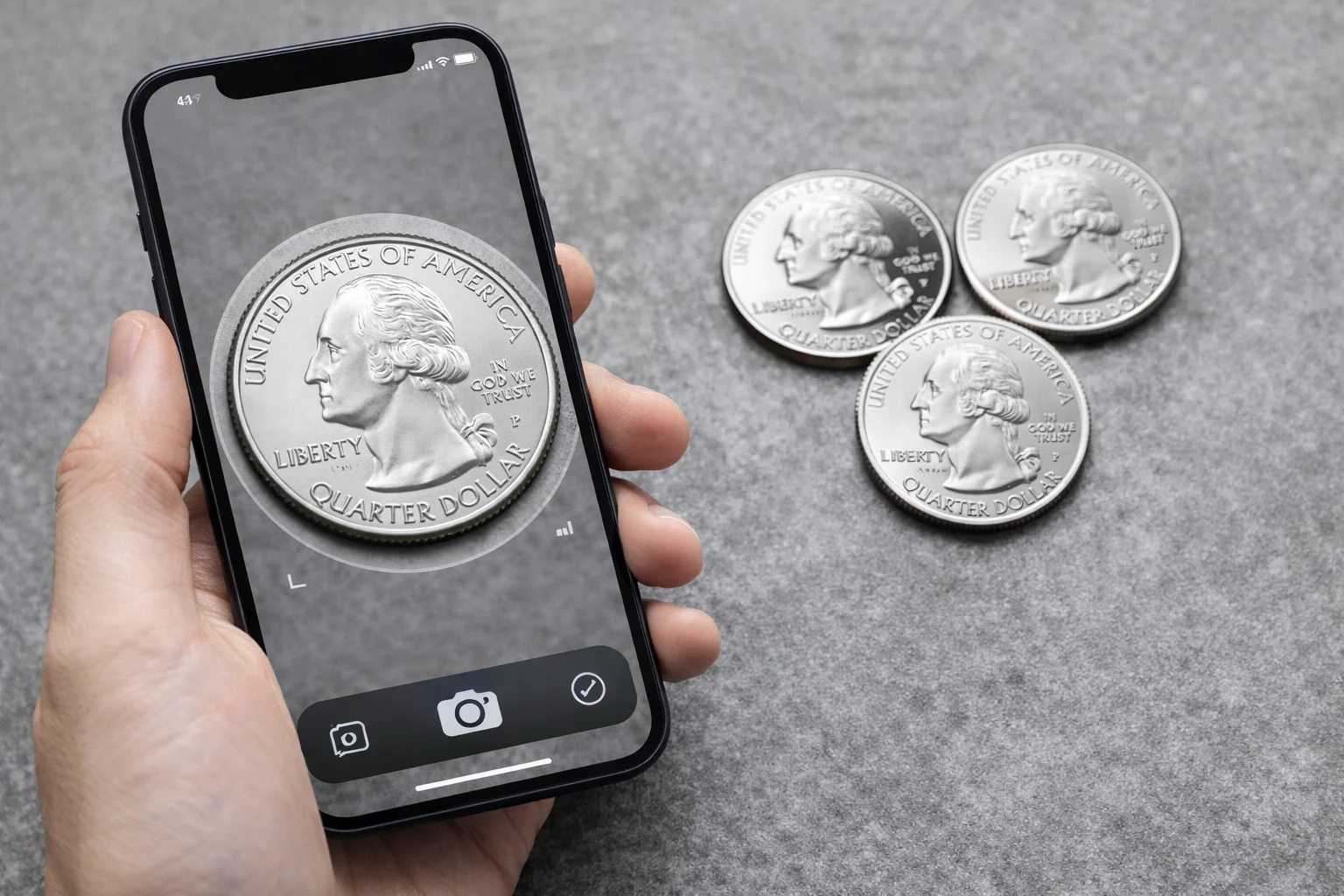
Most are not. Ordinary circulated and low-end uncirculated examples stay in the face-value to low-dollar range. Try the best coin identifier app for sorting modern issues. Coin ID Scanner is useful because it does more than label the coin. It keeps coin cards, collection storage, and filters in one place.
Why do some 2017-S quarters cost more?
Because the S coins exist in several collector formats: clad proof, silver proof, uncirculated, and enhanced uncirculated.
Is the 2017-S silver proof the strongest regular type?
Yes, among the normal quarter formats, it has the strongest floor because it adds silver content to the proof format.
Conclusion
The 2017 quarter is not rare as a date. It becomes interesting when it is sorted by type. The P and D business strikes stay at the bottom of the market for a long time. The S collector issues create the real separation. Clad proofs sit in one tier. S uncirculated and enhanced uncirculated coins add two more collector tiers. Silver proofs stand highest among the regular 25-cent formats. That is the practical way to read the 2017 quarter value.